Sodium sulfate source pathways
One compound. Four origins. Different evidence requirements.
Natural sodium sulfate begins in a mineral deposit or brine. Industrial waste-derived sodium sulfate, mining waste sodium sulfate, and BASS are byproducts created through various industrial processes. While sodium sulfate’s chemical formula remains the same, the material history makes a massive difference in safety.
Pathways at a glance
The source establishes the questions that follow
Origin alone doesn’t determine suitability. It identifies the starting material, process history and evidence needed to evaluate the finished product.
Natural sodium sulfate
Origin
Mineral deposit or naturally occurring brine
Material journey
Extraction, concentration, crystallization, refining and verification
Primary questions
Geological provenance, refining performance, specification and batch consistency
BASS, mining waste, and industrial waste sodium sulfate
Origin
Secondary stream from another industrial operation
Material journey
Original process, recovery, conversion, purification and product testing
Primary questions
Feedstock composition, process residues, contaminant removal, variability and intended use
The U.S. Geological Survey recognizes both natural production and byproduct production, including sodium sulfate from battery acid recycling, cellulose, lithium carbonate and other chemical processes.
Natural sodium sulfate
Natural sodium sulfate comes from a defined source and becomes a refined product
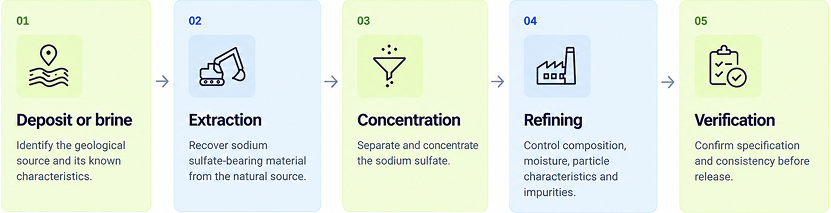
Natural sodium sulfate is obtained from sodium sulfate-bearing mineral deposits or naturally occurring brines. This provides a consistent starting point for creating a safe product.
Provenance
A defined deposit or brine provides the starting point for traceability.
Process history
The path from extraction through refining can be documented and controlled.
Product profile
Testing confirms the product meets quality standards and maintains consistent composition.
BASS, mining waste, and industrial waste-derived sodium sulfate
Multiple industrial origins and multiple concerns
Sodium sulfate created during other industrial processes can be recovered and reused, but they don’t offer a uniform product. Different streams include their own feedstock, chemistry and process history that introduce different potential contaminants, at different volumes.
BASS
Sodium sulfate is a byproduct from multiple parts of a battery’s life cycle. Material processing, manufacturing and recycling all have waste streams containing sodium sulfate and the harmful elements that power batteries.
Mining waste sodium sulfate
Extraction, separation and refining raw materials can generate sodium sulfate whose composition include traces of the ore body, reagents and other elements found in the mines.
Industrial waste-derived sodium sulfate
Chemical manufacturing, industrial wastewater treatment and various other processes create sodium sulfate that has contaminants that are undesirable or dangerous in agriculture and food production.
The central distinction
An industrial byproduct should be assessed based on its feedstock, recovery process, purification controls and intended use, not through the sodium sulfate formula alone.
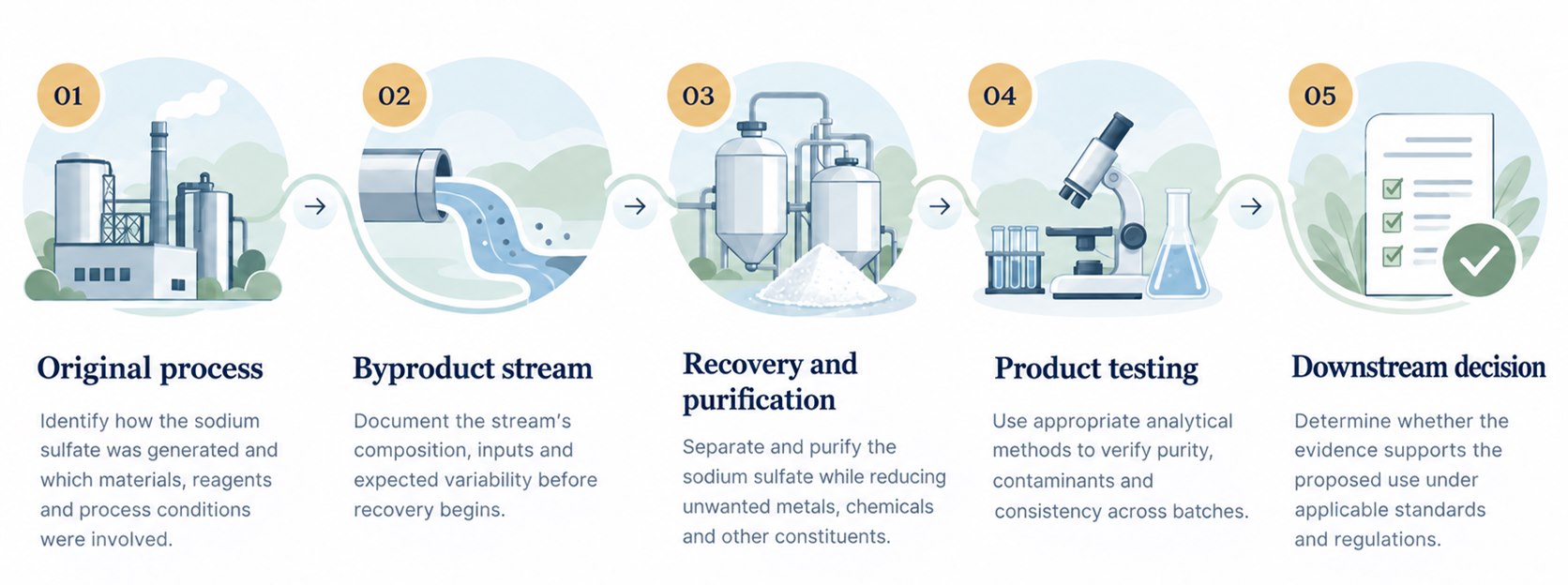
Industrial material journey
From industrial byproduct to proposed end use
The process of purifying BASS, mining waste sodium sulfate and industrial waste-derived sodium sulfate varies based on numerous factors. Each of these areas needs to be fully understood to determine whether the sodium sulfate from industrial processes can be safely used.
 Read the detailed industrial-byproduct guide
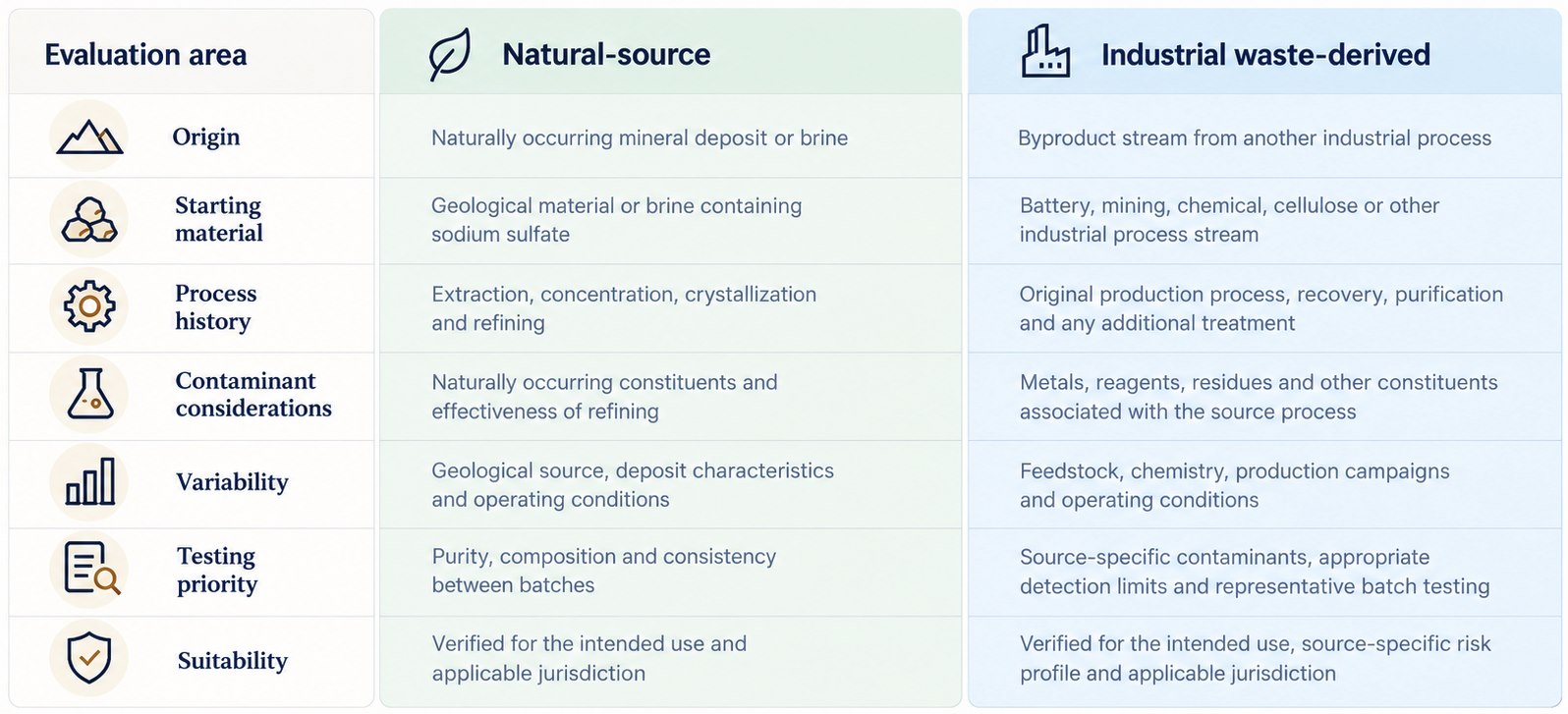
Direct comparison
Source changes the evidence required
Origin alone doesn’t determine whether sodium sulfate is safe for a particular use. Industrial byproducts may contain heavy metals, residual processing chemicals, and other impurities that vary depending on the source material and manufacturing process. Multiple areas need to be evaluated to gauge whether it can be used in a specific way.
This evaluation process is more complicated from sodium sulfate that doesn’t come from natural sources.
One industrial pathway
Battery-derived sodium sulfate (BASS)
BASS is used on this site to describe sodium sulfate recovered from battery-related production, materials processing or recycling streams.
It’s one form of industrial waste-derived sodium sulfate. A process description can establish that purity is technically possible. It doesn’t establish that every resulting batch of sodium sulfate product is equally pure or safely usable.
Evaluation focus
Battery inputs, additives, process residues, purification performance, analytical scope, batch consistency and regulatory fit.
When the proposed destination is agriculture