Agriculture and food-related use
Before industrial waste reaches the food chain
When sodium sulfate recovered from an industrial waste stream is proposed for agricultural or food-related use, the assessment must address more than the principal chemical formula.
Central question
What entered the original stream, what remains after purification and what evidence supports its use?
Follow the potential pathwayWhy use changes the standard
Exposure context matters
Industrial waste-derived sodium sulfate that is earmarked for industrial use presents a lower safety risk than a material that will be applied to soil or introduced into a food-related system.
Agricultural use can result in contact with soil, water, crops, livestock, the environment and people. That makes feedstock disclosure, contaminant testing, detection limits and long-term behavior important for determining whether it’s safe for use.
Important distinction
A potential pathway isn’t proof of harm, but it helps identify the questions that evidence must answer before use.
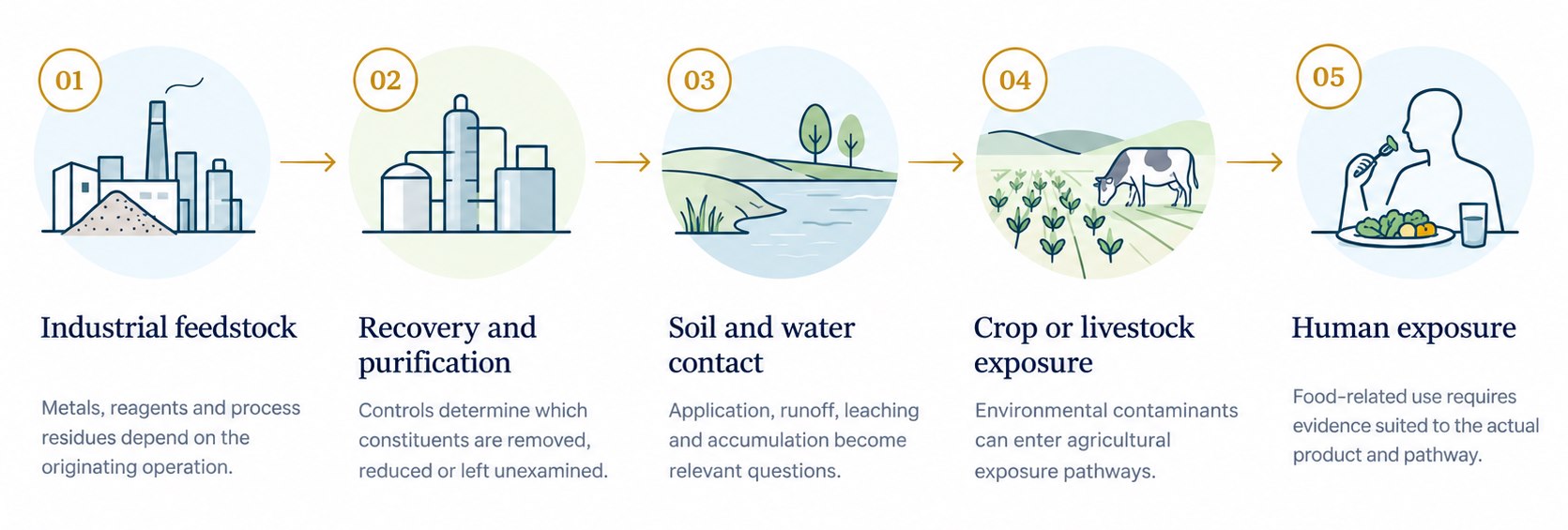
Potential exposure pathway
Five stages where evidence matters
From industrial processing to potential human exposure, each stage presents different considerations for how contaminants are removed, transferred, or accumulated.
Contaminants require source-specific testing
The analyte list should follow the feedstock
Purification is a dynamic and difficult process when it comes to BASS, mining waste sodium sulfate and industrial waste sodium sulfate. Because feedstock varies, the list of contaminants to search for also varies from batch to batch. These questions must be answered before safety can be determined.
Feedstock
Which metals, reagents and process chemicals were present?
The contaminant list in mining waste sodium sulfate won’t be the same across different mines. Does the purification method address this?
Method
Are detection limits appropriate?
There are different food safety limits for lead, nickel, lithium and other contaminants. Is every contaminant brought down to a safe level?
Variability
Do results represent routine production?
One sample cannot establish consistency when feedstocks, operating conditions, campaigns or batches vary. Is testing happening frequently enough to ensure the sodium sulfate remains safe?
EPA guidance recognizes contaminated soil as a potential exposure source and notes that produce grown in lead-contaminated soil can contribute to exposure.
Why contaminant testing matters
Sodium sulfate contaminants can be dangerous
Dangerous contaminants can make their way into industrial waste-derived sodium sulfate. This includes lead, cadmium, and arsenic. Here are the harmful effects of each.
Lead
Neurological and developmental effects
Lead exposure is associated with neurological, renal, cardiovascular and developmental effects. Children are particularly vulnerable to neurological harm.
Cadmium
Kidney, lung and bone damage
ATSDR states that cadmium can enter soil and water from mining and industry. It can then be taken up by plants and animals. Human exposure can result in damage kidneys, lungs and bones.
Arsenic
Systemic and long-term health effects
Inorganic arsenic exposure can affect blood cells, blood vessels and other systems. Long-term exposure is associated with increased cancer risk.
Evidence before sensitive use
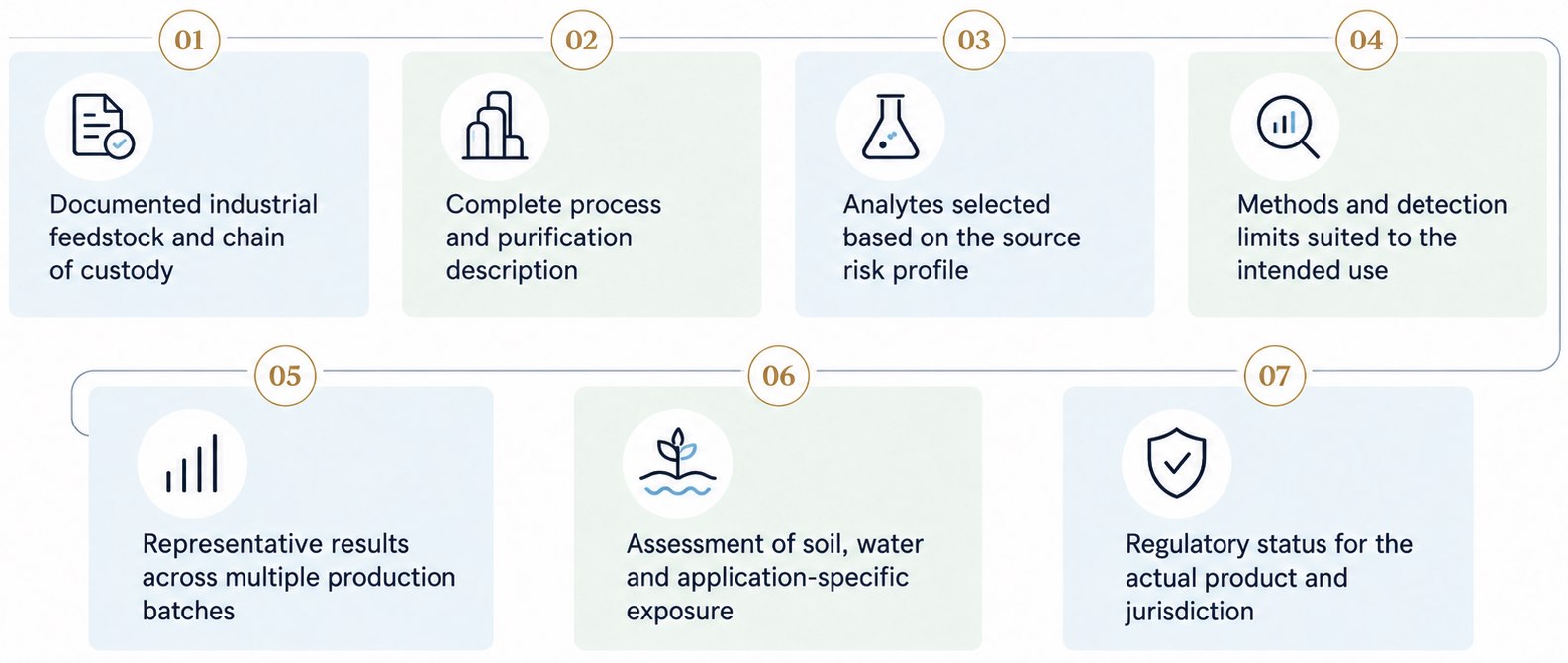
What a credible assessment of purified sodium sulfate should contain
A credible assessment should verify the material’s origin, purity, consistency, and safety for its intended use. This should be supported by appropriate testing based on feedstock and regulatory compliance.
Continue the investigation